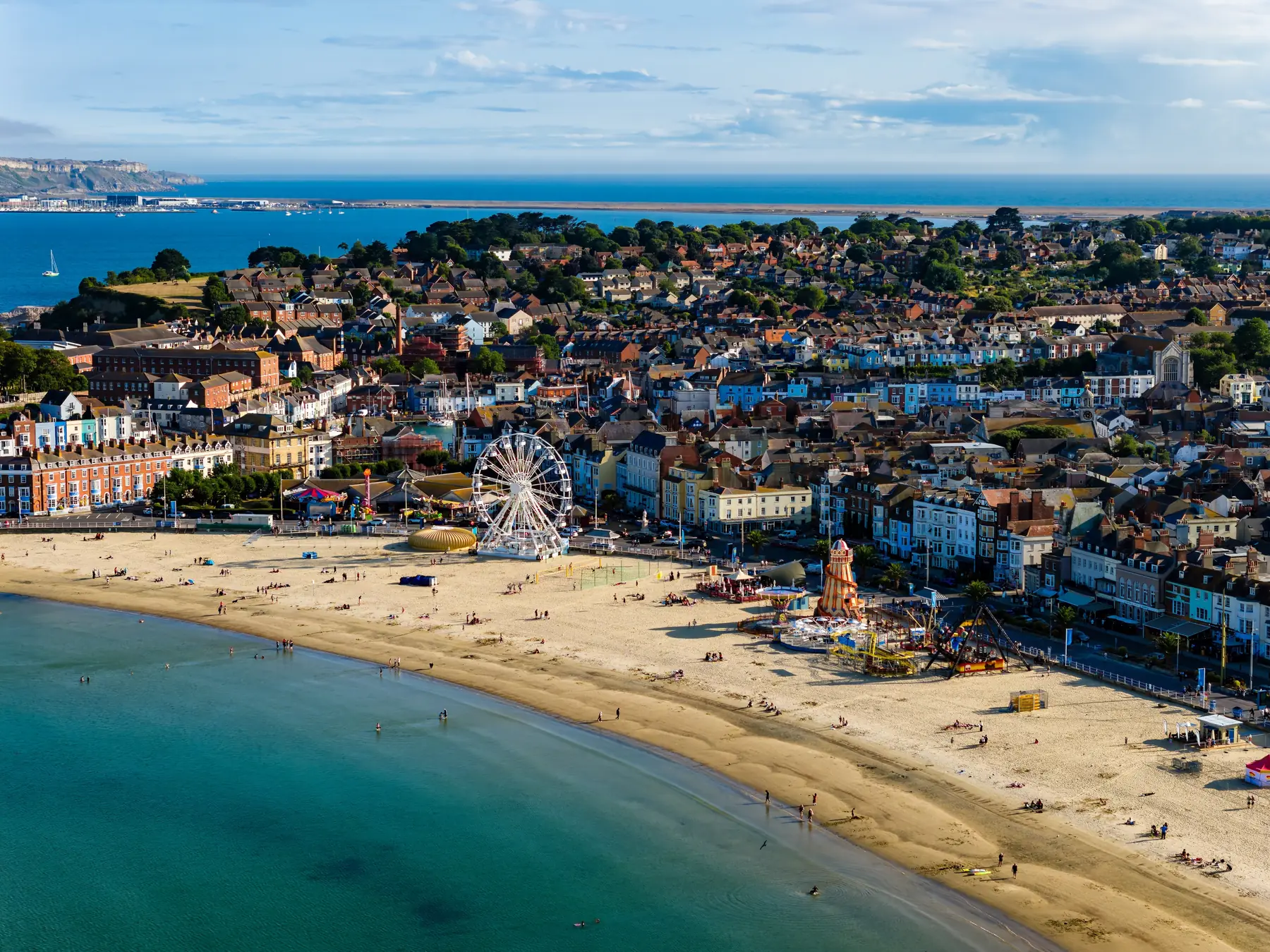
Dorset is one of the drier and sunnier counties in Britain — Weymouth sits on a sheltered south-facing bay and records more sunshine than most of England — but the Channel coast gets its share of weather, and any week here needs a plan for it.
The good news is that within twenty kilometres there is one of the best museums in the world, an aquarium, two Tudor forts, a Victorian fort with tunnels, and a county town full of museums.
Eighteen kilometres north-east at Bovington Camp, and the single best wet-weather destination in Dorset. It holds one of the finest collections of armoured fighting vehicles anywhere — several hundred vehicles from the First World War onwards, laid out chronologically in large indoor halls, including the only running Tiger I in the world.
It is entirely indoors, it takes most of a day, it is consistently one of the highest-rated museums in Britain, and it is interesting whether or not tanks are your subject — the exhibitions do a serious job on the human side of armoured warfare rather than simply displaying machinery.
Live displays run in the outdoor arena in season. See our Tank Museum page.
At Lodmoor. An ocean tunnel, sharks, rays, penguins, otters, seals and a turtle sanctuary. Half a day and mostly indoors — the splash areas rather less so.
On the headland above the harbour. A Victorian fort of the 1860s with casemates, magazines and underground passages cut into the headland, plus gun emplacements and a large collection of military material. A good deal of it is underground and therefore weatherproof, and there are events through the school holidays.
Five kilometres south. One of Henry VIII’s artillery forts, built between 1539 and 1541 in the King’s Device programme against French and Spanish invasion. It is unusually complete — a Tudor gun room, a great hall, a kitchen — and it is English Heritage, with a café and a garden overlooking Portland Harbour.
At Lodmoor. Large sand sculptures under cover, plus the chance to try it yourself. Short, cheap and pitched at families.
The Old Harbour has a seventeenth-century waterfront and pubs and restaurants down both quays, several of them old, small and exactly right for waiting out a squall. The town centre’s shopping streets and the Brewers Quay area cover the rest.
Twelve kilometres north, ten minutes by train, and it packs a remarkable number of indoor attractions into a small county town:
The Dorset Museum and Art Gallery, substantially redeveloped, covering the county’s archaeology, geology and literary history — Thomas Hardy’s study is reconstructed in it.
The Tutankhamun Exhibition, a full-scale reconstruction of the tomb.
The Dinosaur Museum, which suits younger children.
The Keep Military Museum in a Victorian gatehouse.
Maumbury Rings, a Neolithic henge later used as a Roman amphitheatre, which is outdoors but takes ten minutes.
Between them that is a full wet day, and the train from Weymouth takes ten minutes.
Counterintuitively good. Portland is a limestone island with no shelter at all, and in a storm the Portland Race off the Bill — one of the most dangerous tidal races in Britain — is a genuinely alarming sight from the safety of the lighthouse car park.
Tout Quarry Sculpture Park, a disused quarry full of carvings cut into the rock faces, is free and rather better under grey skies. The Castletown D-Day Centre covers the harbour’s role in the 1944 embarkation and is indoors.
The Rodwell Trail is a level surfaced former railway with cuttings and a tunnel, three kilometres from the town to Ferrybridge.
Radipole Lake and Lodmoor RSPB reserves have boardwalks and hides — a hide in the rain being one of the more agreeable places to be.
Nothe Gardens are wooded and sheltered.
The Esplanade is exposed but short, and a big sea into Weymouth Bay is worth watching.
Avoid the coast path east towards White Nothe and Durdle Door in bad weather — it is high, exposed and slippery on chalk, and the Lulworth range closes sections when firing.
Trains run to Dorchester in ten minutes, Poole and Bournemouth in under an hour, and London Waterloo in around three hours. The Heart of Wessex line goes north to Yeovil, Bath and Bristol.
Buses. The X54 runs east to Wool — for Bovington and the Tank Museum — and on to Poole.
Parking in the town fills faster in bad weather.
Seasonal closing. Portland Castle and several attractions reduce hours from November to March; the Tank Museum and SEA LIFE run year-round.
The shape that works: Nothe Fort first thing, which has enough tunnel and casemate to keep you dry for two hours and is a ten-minute walk from the town. Lunch on the harbour quay. Then the drive out to the Tank Museum, which is most of an afternoon indoors and the best museum in the county — or, without a car, the ten-minute train to Dorchester, where four museums sit within a few streets.
Finish back at the harbour, where the pubs are old and small and entirely comfortable with wet visitors.
Worth knowing: this is one of the sunnier corners of Britain. Weymouth and Portland record among the highest sunshine totals in the country, helped by a south-facing coast and the shelter of the island.
What the coast does get is wind, and the Channel weather moves through fast. A wet morning here very often becomes a clear afternoon, and looking at the radar is more useful than reading the day’s forecast. It is also worth checking the Lulworth range firing times before planning a coastal walk east, since they close the path regardless of weather.
The Old Harbour is the answer. Both quays are lined with pubs and restaurants, several of them small and old, with the working boats a few metres away and the lifting bridge going up on a timetable. Sitting in a harbour pub watching rain on the water and a trawler coming in is a perfectly good use of two hours.
In the town, the streets behind the Esplanade — St Mary Street, St Thomas Street and the lanes between — carry the shops and cafés, and the Brewers Quay area at the harbour end covers the rest.
The Tank Museum at Bovington first, then SEA LIFE, Nothe Fort’s tunnels and Portland Castle. Dorchester’s museums are ten minutes by train.
It is one of the highest-rated museums in Britain and holds the finest tank collection in the world. Yes.
Train or bus to Wool, then a short taxi or walk; the X54 bus also serves the area.
Substantially — the casemates, magazines and tunnels are cut into the headland. The ramparts are not.
The Dorset Museum, the Tutankhamun Exhibition, the Dinosaur Museum and the Keep Military Museum, all within a few streets.