The Tank Museum
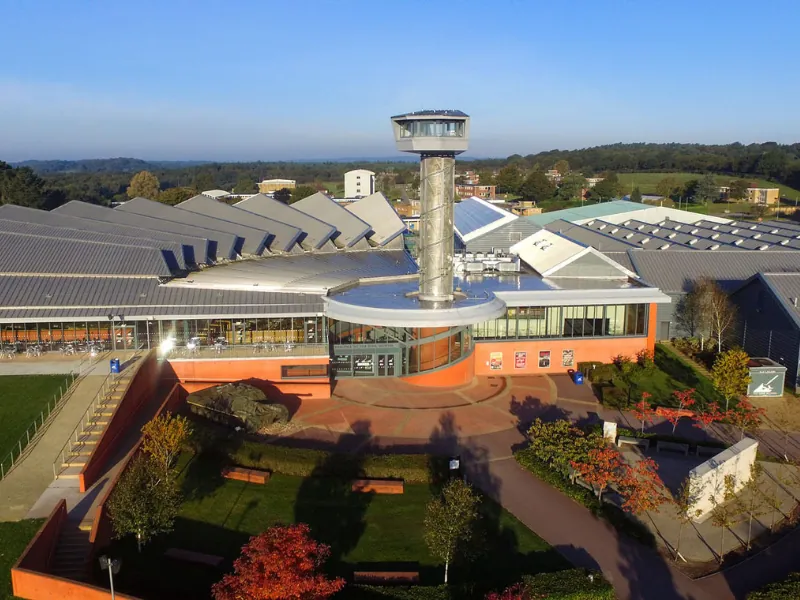
The Tank Museum is a collection of armoured fighting vehicles at Bovington Camp in Dorset, South West England.
The Tank Museum, Dorset National Landscape and more: the attractions, the days out and how to plan your visit.
Weymouth is a seaside town on a sheltered bay at the mouth of the River Wey, 7 miles (11 km) south of Dorchester, with a population of 53,416 at the 2021 census — the third-largest settlement in Dorset after Bournemouth and Poole. It stands roughly halfway along the Jurassic Coast, the World Heritage Site designated for its geology, and the middle of it is compact: the walking day published here links the fort, the harbour, the gardens and the beach in 1.7 km. The cross-Channel ferry trade has gone — the furthest a passenger vessel now goes from Weymouth is Portland — and the Old Harbour is given over to pleasure boats and private yachts.
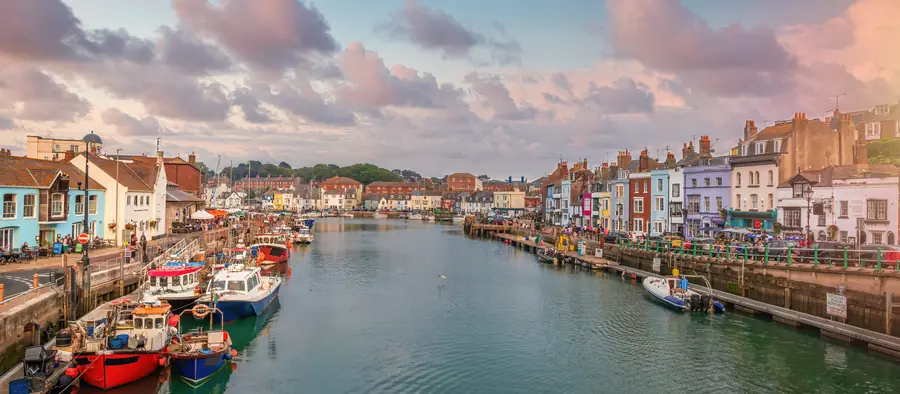
The harbour is the mouth of the Wey. The Roman port lay upstream at Radipole and silted up; the silt became Radipole Lake, now an RSPB reserve a short walk from the town centre. The present harbour, between Weymouth Old Town and Melcombe Regis, developed in the 12th and 13th centuries and has a 17th-century waterfront and a lifting bridge into the marina. It rates 4.7 from 1,685 Google reviews.
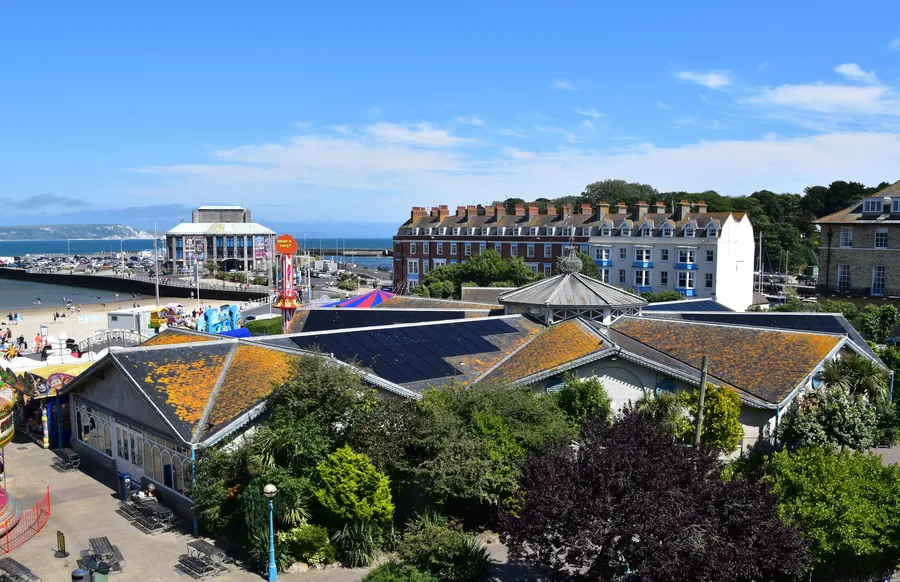
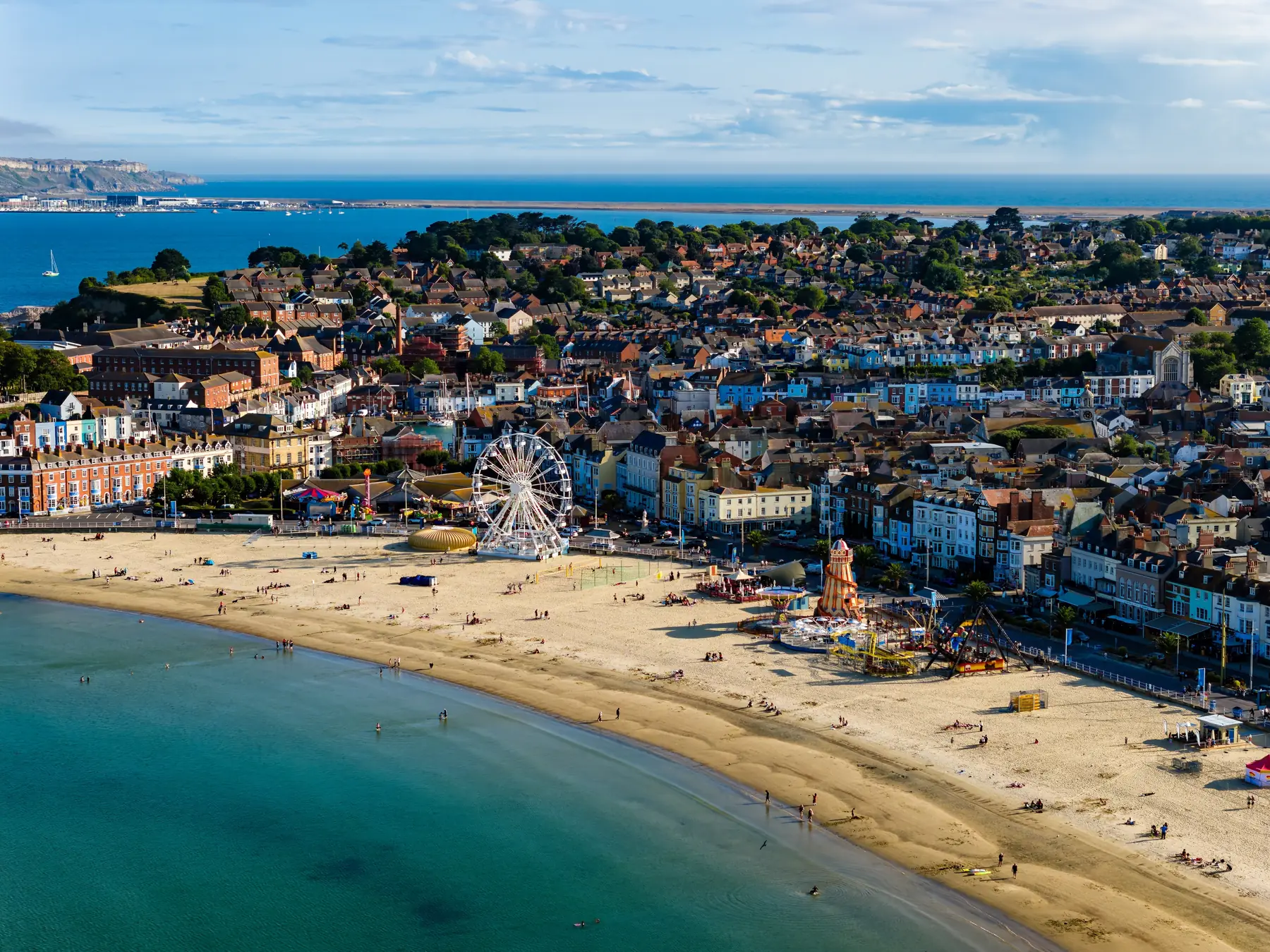
North of the harbour entrance is Weymouth Pier, and beyond it the beach: a wide, gently sloping arc of sand with the Esplanade directly behind, 4.7 from 6,180 Google reviews, and voted number one in The Times and Sunday Times Best UK Beaches 2023. George III began coming in 1789 to take the waters after his first bout of porphyria, named the town his “first resort” and made bathing fashionable here. The seasonal furniture is traditional: donkey rides, Punch and Judy and sand sculptures. Alexandra Gardens has more history than its amusement frontage suggests — an 1891 bandstand glazed in as the Kursaal in 1913, a reception centre for ANZAC soldiers wounded at Gallipoli, a concert hall from 1924, an arcade from 1963, burnt down in 1993 and rebuilt to the Kursaal’s shape.
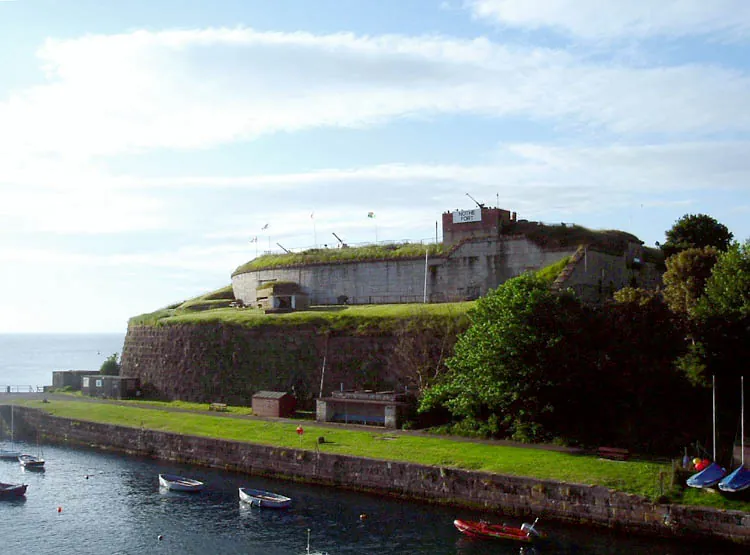
South of the water the Nothe peninsula juts east between Weymouth and Portland harbours. Nothe Fort stands on the end of it: built between 1860 and 1872 by the Royal Engineers, abandoned in 1956, restored from 1980 by the Weymouth Civic Society, with part of the magazine level fitted out as a Cold War nuclear shelter. It is 4.7 from 4,433 Google reviews, with Nothe Gardens alongside. South-west along the Rodwell Trail, an old railway line, is Sandsfoot Castle; north-east, past Greenhill Gardens, Lodmoor Country Park holds SEA LIFE, Sandworld and a second RSPB reserve.
Weymouth does not read as a crowded place in the reviews. Across the 200 dated review excerpts gathered for this guide, covering twenty places, only four mention crowds or being busy at all — but eleven mention parking. That is where the friction sits.
The clear crowding warning is the beach in the school holidays. A visitor in June 2025 wrote, “We visited here outside of the school holiday season, and it was still quite busy, so I would imagine the beach would be extremely busy during peak season.” Parking runs through the rest: a visitor to Alexandra Gardens in April 2026 wrote, “There is parking round the area but, it’s hard to find at times. Best time to park around the amusement gardens is in the mornings.” Reviews disagree about which car parks charge what and when, so check on the ground. The Mount Pleasant Park and Ride is about ten minutes by bus from the centre.
Weather closes things here more reliably than crowds do. A visitor to Nothe Fort in July 2026 advised, “Be sure to avoid particularly windy or wet days, as then the upper ramparts will be closed”. The one date the town fills deliberately is New Year’s Eve, when, Wikivoyage records, everyone goes out in fancy dress.
A day covers the town. The walking day published here leaves the car at the Pavilion car park and runs Nothe Fort, the Old Harbour, coffee on Custom House Quay, Alexandra Gardens and the beach, ending with lunch on St Mary Street: 1.7 km, about 30 minutes on foot spread across the day, plus roughly 10 minutes back to the car. With young children, the fort and the harbour alone come to about 20 minutes’ walking in total.
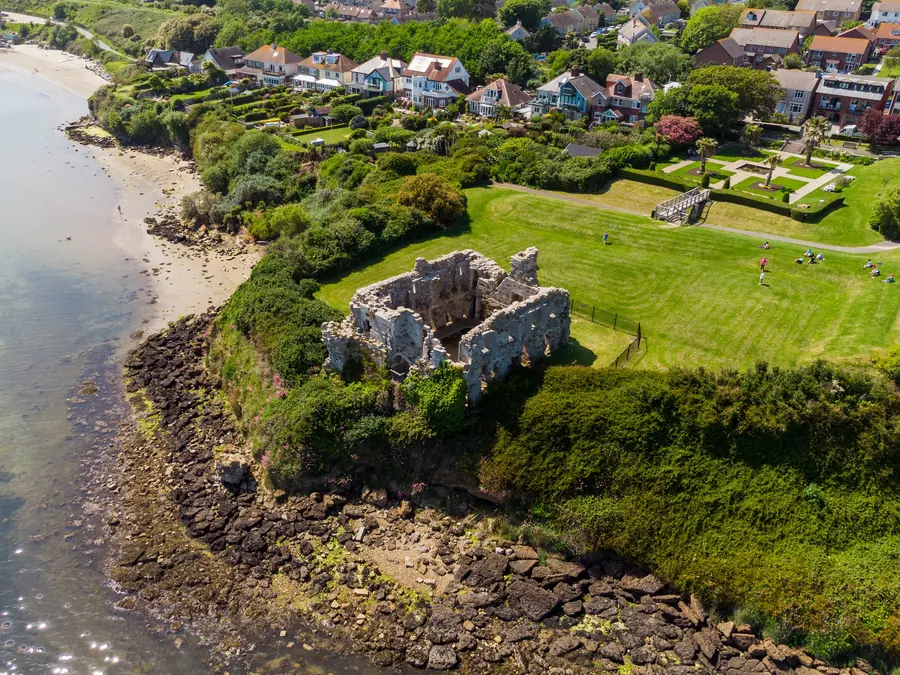
Nothe Fort takes the largest single bite. A visitor in July 2026 called it “a really good way to spend half a day”; one in August 2025 reported, “It took us 2 visits to see it all”, helped by a ticket that doubles as an annual pass. Sandsfoot Castle is the opposite: the ruins have been fenced off on safety grounds and cannot be entered, and a visitor in July 2026 found them “nice to see but limited”, the gardens above doing most of the work.
Two nights adds Portland, a boat trip out of the harbour or a day inland. On where to sleep, Wikivoyage is blunt — “There is a lack of high quality hotels within Weymouth” — and the strength is the Georgian bed and breakfasts along the Esplanade, with caravan and holiday parks ringing the bay.
Distances below are straight-line from the centre unless stated. Wyke Regis, the south-western suburb, is 2.7 km; Chickerell, which Wikipedia puts 2 miles (3 km) north-west of Weymouth, is 3.9 km.
The Isle of Portland is the obvious half-day out: a tied island of stone joined to the mainland by Chesil Beach. Castletown is 4.9 km, Fortuneswell 5.7 km and Easton 7.5 km. Portland Castle — built by Henry VIII between 1539 and 1541, sister fort to Sandsfoot across the anchorage — stands at Castletown beside the D-Day Centre, and Portland Harbour holds the National Sailing Academy that staged the 2012 Olympic and Paralympic sailing. A seasonal open-top bus runs down to Portland Bill from the King’s Statue stops.
Inland, Dorchester is 11.6 km, advertised at eight minutes by train: the county town, population 21,358 in 2021, with the Dorset Museum & Art Gallery at 4.5 from 1,284 Google reviews, Maiden Castle and Hardy’s house at Max Gate. Not everything there is admired — the Dinosaur Museum stands at 3.4 from 813 reviews.
West along the coast, Abbotsbury is 12.1 km, a parish of 451 people at the 2021 census with the Swannery, the Subtropical Gardens and St Catherine’s Chapel on the hill above; the X53 bus runs that way towards Bridport and Lyme Regis. The Tank Museum at Bovington, the most-reviewed attraction in the area at 4.9 from 16,733 Google reviews, is further out — Wikipedia places it 1 mile (1.6 km) north of Wool.
The places that define Weymouth.
The most-visited sights in and around Weymouth.
The Tank Museum is a collection of armoured fighting vehicles at Bovington Camp in Dorset, South West England.
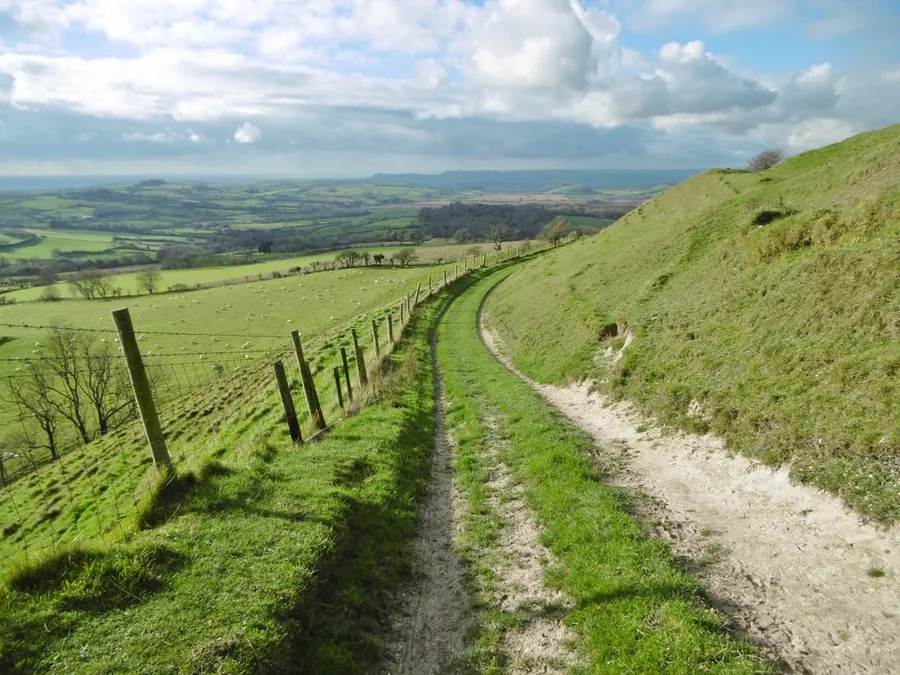
Dorset National Landscape is a National Landscape area in Dorset, southern England, formerly known as and still legally designated as the Dorset Area…
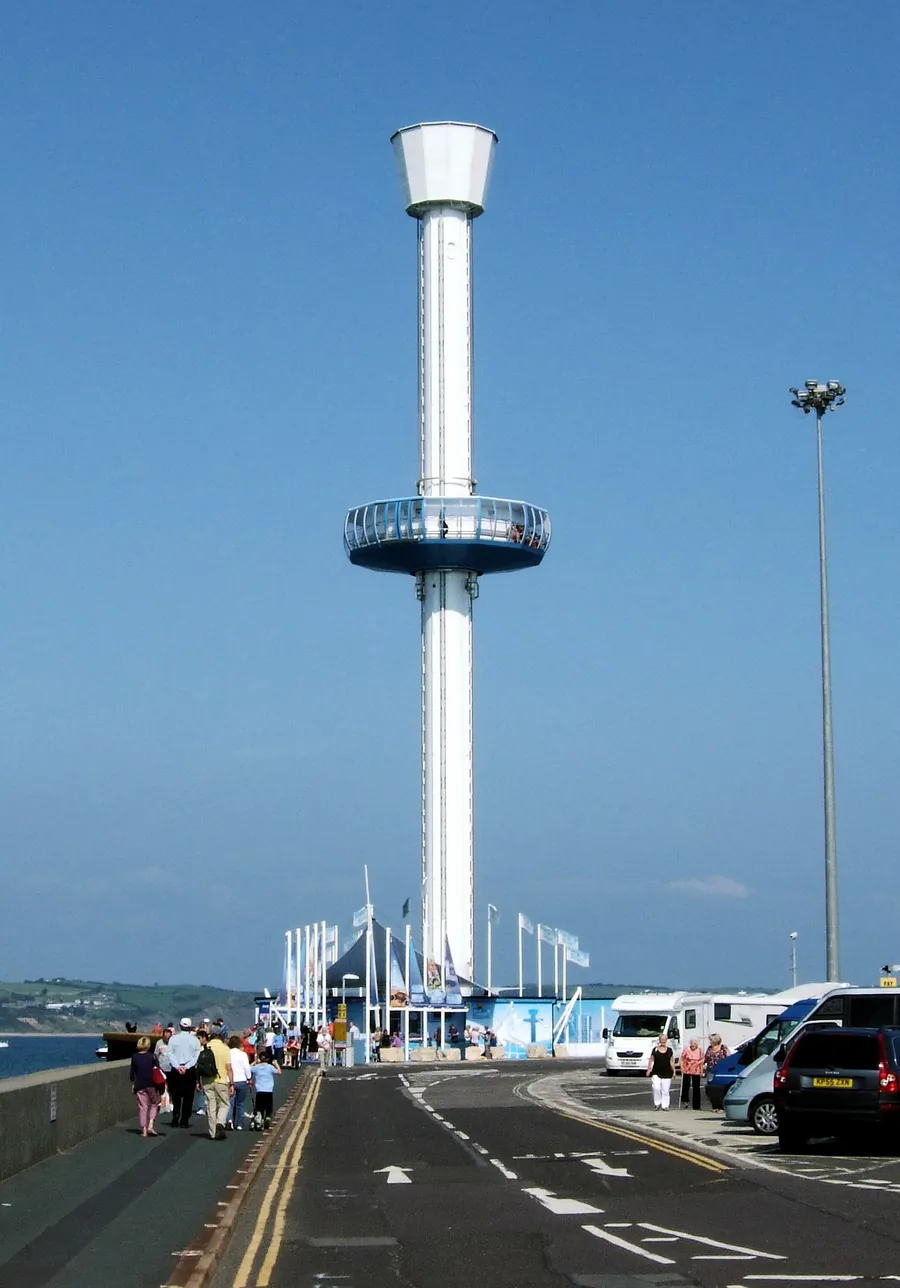
Nothe Fort is a fort in Weymouth, Dorset, England, situated at the end of the Nothe Peninsula, which juts eastwards from the town of Weymouth, and…

Alexandra Gardens Theatre was a theatre at Weymouth, Dorset, England. Originally known as the Alexandra Gardens Concert Hall, it was opened in 1924…
The top sights on one map — and a sensible order to see them in.
Attractions, prices and availability in Weymouth
These come from GetYourGuide's booking widget, which sets their cookies in your browser. Consent to load it and see the attractions and prices.
Follow the A35 towards Dorchester, but turn off on the junction for the A354 (that has signs for Weymouth). Then follow the signs into the town.
Follow signs for Bridport, then take the A35 towards Dorchester. At the roundabout junction with the A354 take the third exit towards Weymouth. At the next roundabout near Morrisons, take the coast road towards Weymouth.
National Express operates a coach service to and from Weymouth's seafront. Services run to London Victoria, Portsmouth, Bournemouth, Brighton, Bristol, Blackpool and Helston with connections to other locations from those towns. First runs regular services (X53) along the Jurassic Coast to Axminster. The X54 operates from Weymouth to Poole.
Despite its history as a cross-Channel ferry port, these days the furthest you can get on a passenger vessel from Weymouth is Portland; ships from the Channel Islands and France dock at Poole. Services to Poole from the Channel Islands of Guernsey and Jersey, as well as Cherbourg in Normandy and Saint-Malo in Brittany by fast or traditional ferry are provided by Brittany Ferries and Condor Ferries.
Written from what we found on the ground.
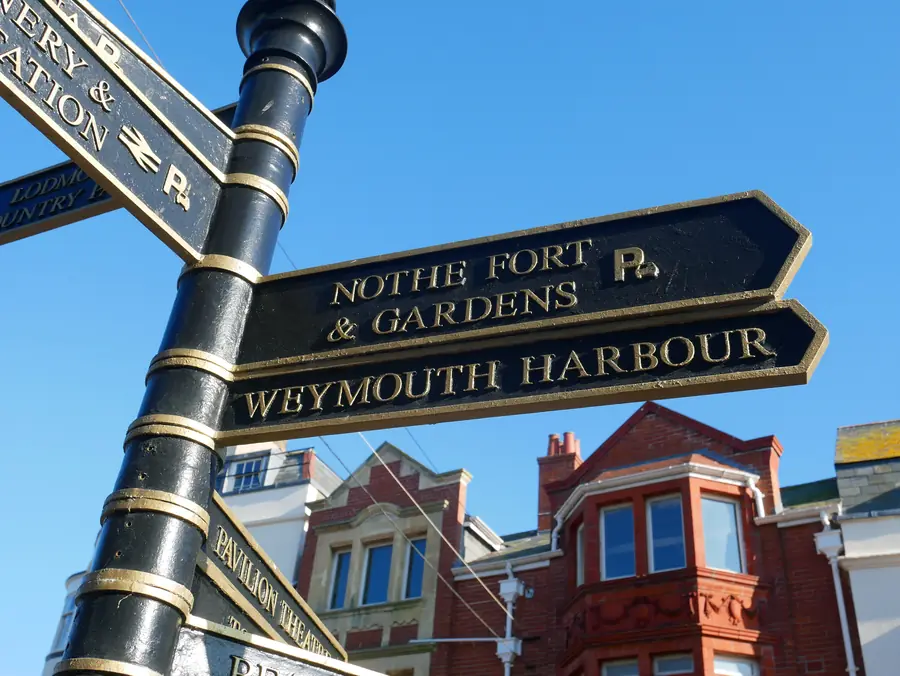 Weymouth Beach and the Georgian Seafront Why Weymouth's beach is the best in Dorset — the sand, the shelving bay, Punch and Judy, the donkeys, the sand sculptures, and the Georgian Esplanade behind it. Read the guide →
 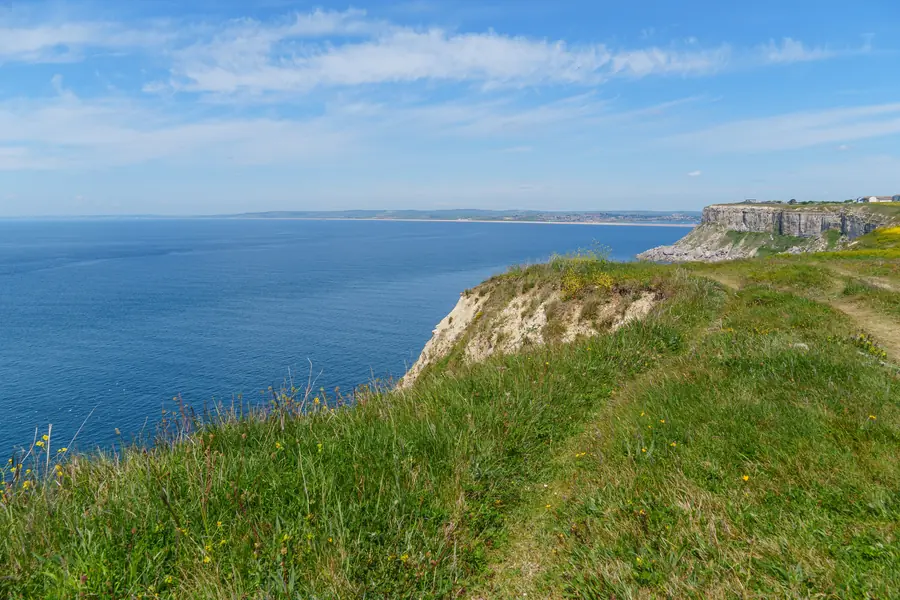 Day Trips From Weymouth: The Jurassic Coast and Dorset Where to go from Weymouth — Portland and Chesil, Lulworth and Durdle Door, Abbotsbury, Dorchester and Maiden Castle, the Tank Museum, Corfe Castle and Lyme Regis. Read the guide → Where to Eat and Drink in Weymouth Eating in Weymouth — the harbour restaurants, fish landed at the quay, the Georgian town pubs, Portland's crab and the Dorset produce inland. Read the guide →